
Group Therapy for Mothers
We were never meant to carry motherhood alone.
Motherhood can be profoundly isolating, especially in the places we are least prepared to talk about: grief, anger, anxiety, loss, identity, and the parts of becoming a mother that don't resemble what we imagined.
Therapy for Mamas groups exist to offer a village when there is none. To demystify the experiences that leave us wondering if we're the only ones. To give language to what has been difficult to name, and to create space for mothers to witness one another without fixing, minimizing, or looking away. Because sometimes healing begins not with an answer, but with the relief of looking across the room and realizing: I'm not the only one here.
To request to join any of the current groups, please use the contact form below.

The Mother Rebellion
What if your anger is not simply something you need to get better at controlling?
Motherhood can ask women to carry an extraordinary amount of responsibility, invisible labor, overstimulation, grief, identity change, unmet needs, and conflicting expectations. And then, when anger inevitably appears, the conversation often becomes about how to make it go away.
But anger can also be information. It may be telling you that something is unsustainable. That a boundary has been crossed. That resentment has been building. That you are grieving. That you have been accommodating everyone else's needs while losing contact with your own.
The Mother Rebellion is a closed, three-part therapy group for mothers who want to understand their anger rather than simply become better at suppressing it.
Across the group, we will explore what anger is responding to, the messages many women receive about whether they are allowed to express it, and what can happen when anger has nowhere to go. We will identify the needs, boundaries, expectations, grief, and relational patterns that may exist underneath it and develop practical ways of expressing anger without turning it inward or allowing it to harm the people we love.
And because anger is not only cognitive, this group also makes room for the body.
The experience includes in a facilitated rage-room session where participants can physically release anger in a contained environment alongside the women they have spent the group getting to know.
This is not about becoming a mother who never gets angry. It is about learning to experience anger without being controlled by it, understand what it is trying to communicate, and decide what may need to change.
Your anger is allowed to have a voice. It does not have to have the final word.
$350 Investment includes rage room admission.
Miscarriage Support Group
Pregnancy loss can leave you grieving a future that had already begun.
Miscarriage involves grief for your baby alongside the loss of an imagined future, trust in your body, a sense of safety in pregnancy, and the person you expected to become.
And because miscarriage often happens before a pregnancy has become visible to the outside world, you may find yourself grieving something profoundly significant while receiving surprisingly little acknowledgment of what has happened.
Therapy for Mamas Miscarriage Support Group is a therapist-led space for women navigating miscarriage and recurrent pregnancy loss to be with others who understand this particular kind of reproductive grief.
Together, we may explore grief, identity, anger, guilt and self-blame, the physical experience of loss, relationships, interactions with the medical system, returning to everyday life, uncertainty about trying again, and the complexity of pregnancy after loss.
You do not need to be at a particular stage of grief to belong here. You do not need to have the right words for what happened. And you do not have to make your grief smaller in order for other people to understand it.
Your pregnancy mattered. Your grief does too.
$50 Investment per group session.

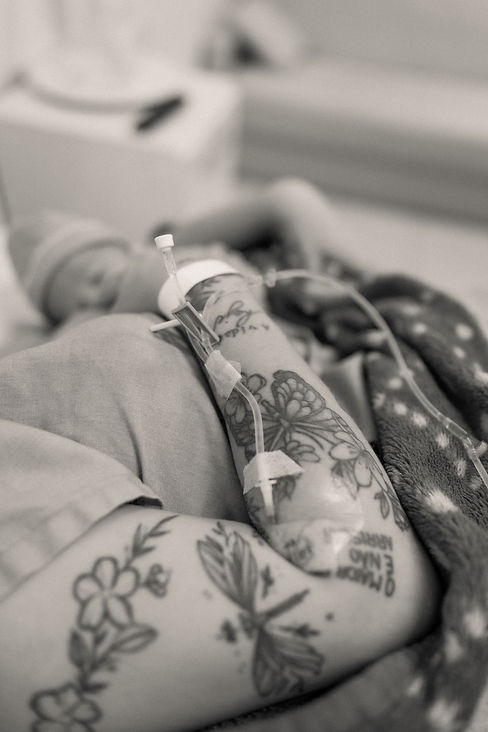
Stillbirth Suport Group
No parent should ever have to bury their child.
There is something fundamentally wrong with the order of things when a parent has to hold their child's body after they have died. To memorize their face because there will be no new expressions to learn. To choose what they will wear for the last time. To plan a funeral when they should have been planning a life.
Everything in us rails against it.
And yet, after stillbirth, parents are asked to somehow survive the unsurvivable. You may labor and give birth to the baby you already know you cannot keep. You may have only hours or days to hold them, photograph them, introduce them to family, and create the memories that will have to last the rest of your life. Then you leave the hospital without your child.
Your body may still bleed, ache, heal, and produce milk. Your body knows you gave birth, while you are being asked to comprehend a reality that feels incomprehensible.
Therapy for Mamas Stillbirth Support Group is a therapist-led space specifically for women grieving the death of their baby through stillbirth.
Here, your baby does not need to be explained or their significance qualified. You can say their name. You can talk about their life and their death, the memories you have and the ones you were supposed to get to make, and what it means to continue living in a world in which your child should still exist.
Together, we may explore grief and continuing bonds, the birth experience, trauma, postpartum recovery, lactation after loss, anger, guilt and self-blame, identity, relationships, parenting living children, anniversaries and milestones, and the fear and complexity that can accompany pregnancy after loss.
There is no expectation that grief will follow a particular timeline or arrive in a particular form.
There is room here for the love, the devastation, the rage, the questions, and the lifelong relationship you have with the child who died.
Your baby lived. Your baby died. Both belong here.
$50 Investment per group session.